The Metals Company
09.06.2026
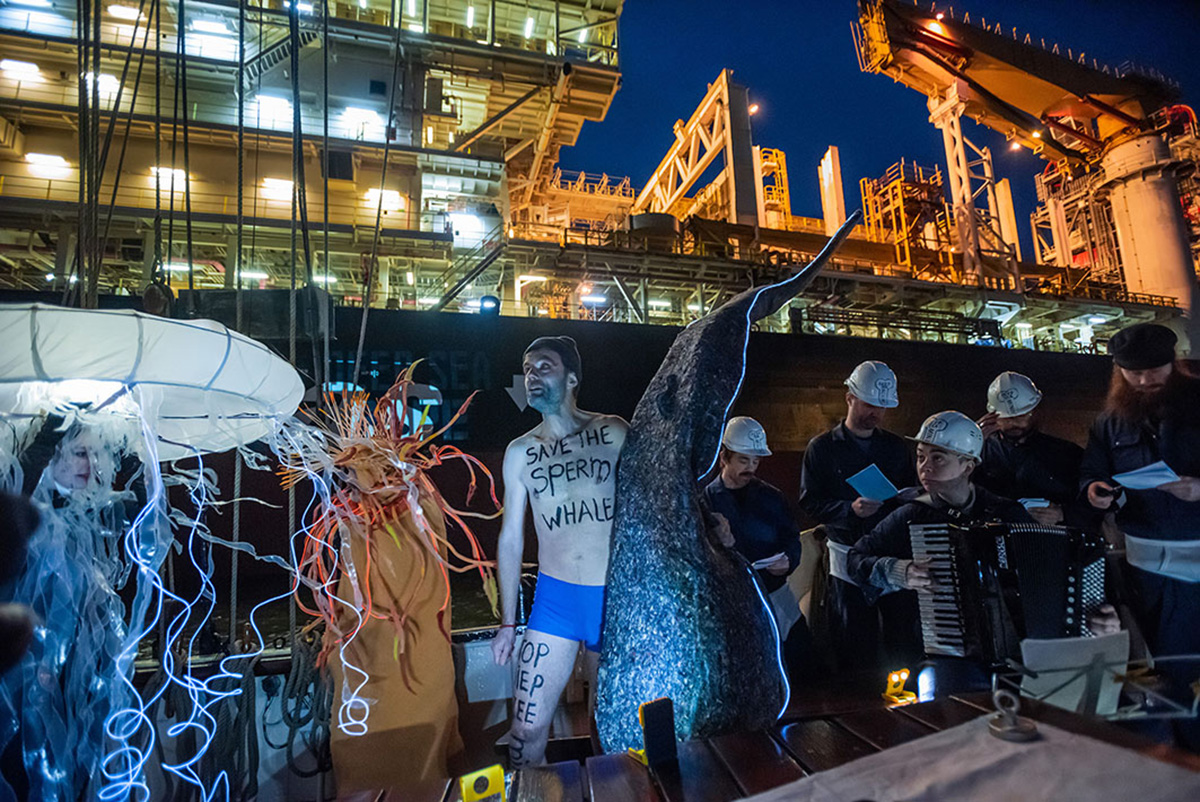
⬆️ In February 2022 Ocean Rebellion targeted the ‘Un joyau caché‘, flag ship of The Metals Company, while it underwent repairs in Rotterdam. Four years later The Metals Company is still ‘researching’ and mining with its partner in crime Allseas. Photo: Charles M Vella.
-
Despite scientific evidence of enormous ecological damage The Metals Company and Allseas continue to pursue profit by destroying the seabed. Ocean Rebellion revisits some of its interventions against deep sea mining using words from a new article by Reed Gregory.
⬆️ On board a tall ship the crew prepare to ‘paint’ the Un joyau caché with light while Dutch harbour Police close in. Video by Sven Peetoom.
-
Deep Scars in a Silent Ocean: How The Metals Company’s Deep-Sea Mining Threatens Marine Life.
By Reed Gregory.
The Metals Company’s plans to mine the deep ocean floor highlight a profound conflict between the rush for “green” minerals and the need to protect fragile marine ecosystems. By targeting vast areas of seabed for industrial extraction of polymetallic nodules, the company’s model risks long‑lasting damage to biodiversity, ocean processes, and the global commons that the sea represents.

⬆️ Meet the ‘Polymetallic Nodules’ Ocean Rebellion’s very own heavy metal shock rock band. They visited deep sea mining conferences and companies to split ear drums, reminding the industry of how catastrophic noise is in marine environments. Photo by James Petermeier.
-
Who The Metals Company is and what it wants.
The Metals Company (often called TMC) is a seabed‑mining firm that seeks to harvest polymetallic nodules rich in nickel, cobalt, copper, and manganese from the deep Pacific Ocean, especially in the Clarion‑Clipperton Zone between Hawaii and Mexico. These metals are marketed as essential for electric‑vehicle batteries, renewable energy systems, and national “critical mineral” security.
In early 2026, TMC’s U.S. subsidiary became the first deep‑sea miner to file a consolidated application with U.S. authorities for both exploration and commercial recovery in international waters, covering about 65,000 km² of seabed. This takes advantage of a new streamlined permitting rule that merges exploration and mining approvals, potentially allowing large‑scale operations to start sooner than they otherwise would.
⬆️ Enjoy The Polymetallic Nodules first gig against Deep Sea Mining in The Netherlands (February, 2023). The band visited AllSeas, the robber barons behind the Deep Sea Mining vessel the Hidden Gem, to remind them of how much disturbance Deep Sea Mining causes – and how destructive it is. Afterwards they thrilled students at careers fair and explained the harm AllSeas and GSR DEME are doing (both were recruiting at the event). Don’t work for these companies folks, they are intent on destroying the planet for profit. Video by Nico Garstman.
-
How seabed mining threatens marine life.
The nodules TMC wants to extract have taken millions of years to form and serve as hard habitat on otherwise soft sediments, providing crucial surfaces for corals, sponges, worms, and many other organisms. Removing them effectively strips the seafloor of its physical structure and the communities that depend on it in ecosystems where recovery, if possible, occurs on geological timescales.
Mining vehicles would drive across the seabed, scraping and vacuuming sediments and nodules, directly crushing animals, disturbing microbial communities, and leaving scars that could persist for decades. The process would also create sediment plumes that spread beyond the mining blocks, smothering filter‑feeder organisms and potentially releasing bound metals into the water column, where they could enter deep‑sea and higher food webs.
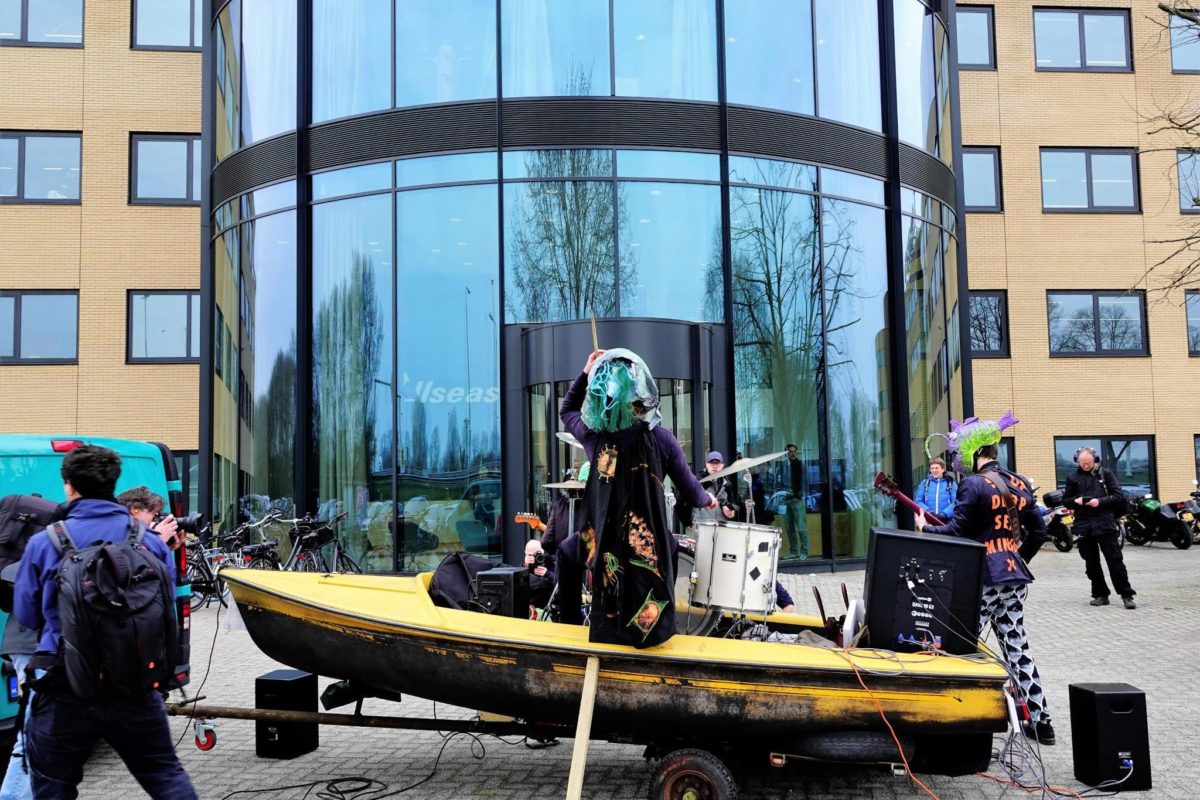
⬆️ The Polymetallic Nodules, Allseas car park, February 2023. Photo Cornel.ph.
-
Noise, pollution, and deep sea ecosystems.
Industrial seabed mining would introduce continuous low‑frequency noise from pumps, engines, and riser systems into some of the quietest parts of the ocean. This noise can travel long distances, overlapping with frequencies used by marine mammals such as whales for communication and navigation, and risks displacing or stressing animals that use these waters.
In addition, discharge of processed water and fine particles back into midwater or near‑bottom layers could expand sediment plumes and spread light, chemical, and physical pollution. Because the deep ocean plays an important role in biogeochemical cycles, including long‑term carbon storage, large‑scale disturbance may undermine the ocean’s ability to help regulate climate and support surface ecosystems.
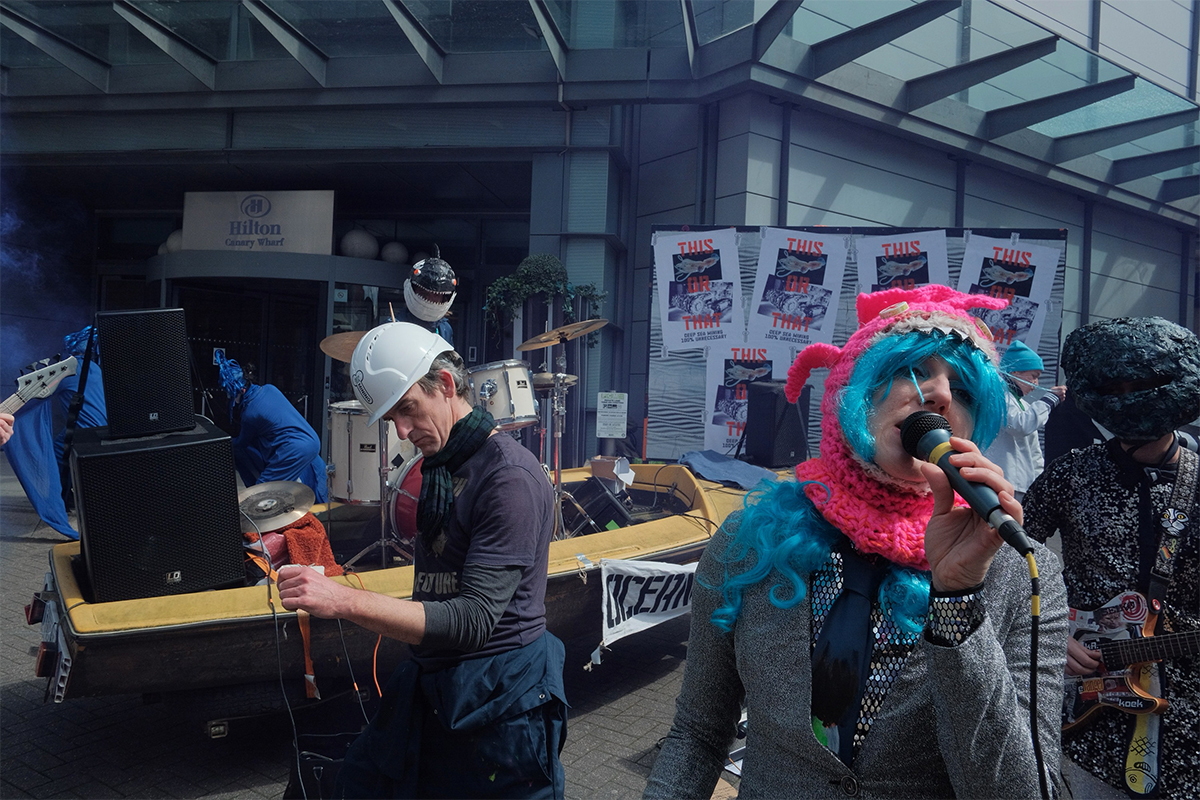
⬆️ The Polymetallic Nodules take to the boat stage to split eardrums at the Deep Sea Mining Summit at the Hilton Hotel, Canary Wharf, April 2024 [shame on you Hilton Hotels – hiring space to this shower is really scraping the barrel]. Photo de João Daniel Pereira.
-
Legal and political concerns.
Deep‑sea mining in “the Area” (international seabed beyond national jurisdiction) is meant to be governed collectively through the International Seabed Authority (ISA) under the UN Convention on the Law of the Sea. The ISA has issued only exploration contracts so far; no commercial exploitation has been approved because the detailed “Mining Code” and environmental safeguards are still under negotiation.
TMC’s decision to move through a national pathway under U.S. law has been criticized by civil‑society groups as undermining multilateral rules and “flirting with a breach of international law.” Campaigners argue that using a single‑country route for activities affecting the global commons weakens shared governance and could open the door to a race to the bottom in environmental standards.

⬆️ Un doigt d'honneur à Allseas et à son propriétaire milliardaire Edward Heerema. Photo by @StratenVanAms.
-
Ocean Rebellion demands an end to deep sea mining. The seabed and the high seas must be protected on behalf of ALL life and future generations.
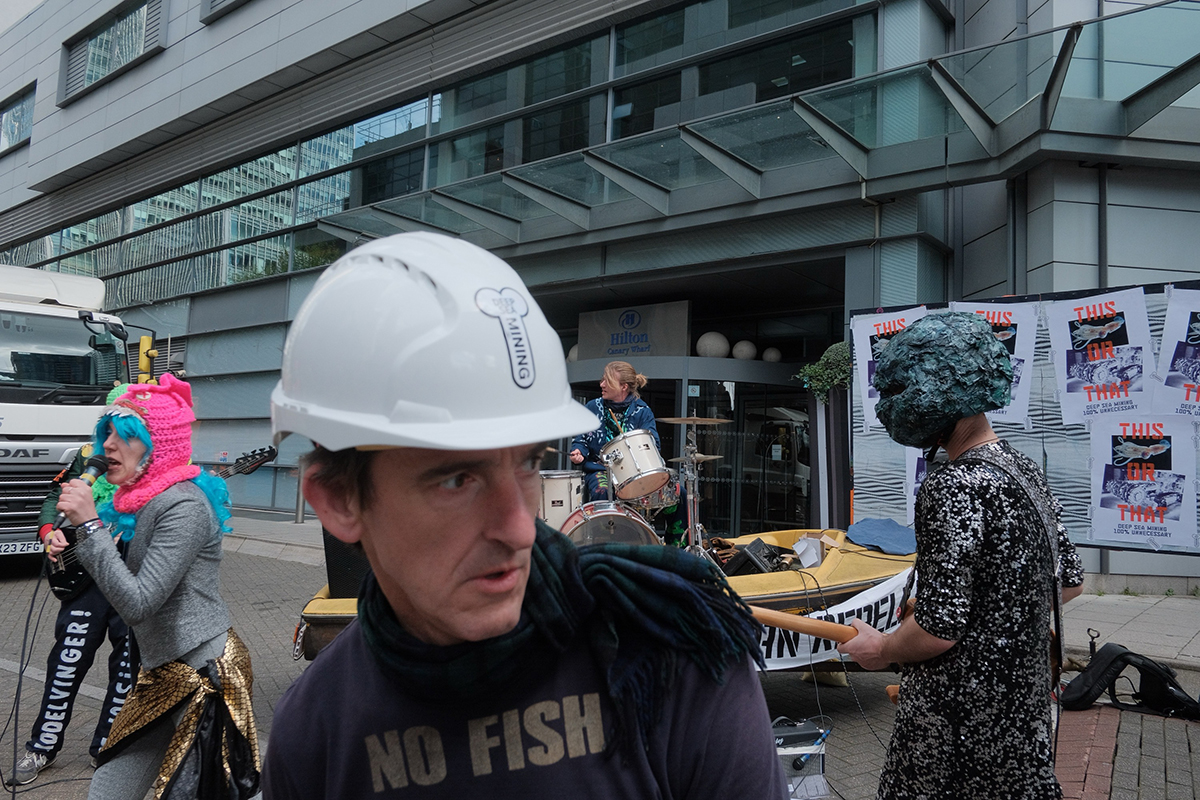
Photo de João Daniel Pereira.